It has been a while I posted on my blog and I am back after finishing four Seesaw activities I created for my first two asynchronous classes of 2022. They are about celebrating the New Year and learning about the Twelve Grapes tradition (Las Doce Uvas). These activities are addressed to Pre-K through fifth grade but can certainly be implemented at different grade levels. Let’s keep collaborating in the New Year!!!
First to Fifth GradeFirst to Second GradePre-K to KThird to Fifth Grade
One of the things I have been doing for a couple of years to welcome my students and make them feel confident they will succeed in my class is using meaningful cognates on my bulletin board. That is the first area they see before stepping into my classroom and it is my billboard to amplify my motto for the year.
The first bulletin board I set up was about STEM cognates in a year we wanted to focus our division efforts towards that area. Here is the resource I created:
I remember I invited my students to work in groups to figure out how many words they already knew. They were thrilled about how much they already knew.
Last year, I wanted my bulletin board to show my appreciation for how diverse our school community was and the values we stand for. Rather than focusing only on the meaning of the words, I invited my students and their homeroom teachers to select the five most important words from the display and type them in their order of importance on a Paddlet. Then, we analyzed what words were ranked higher and discussed words that should be added but were not cognates. “Familia”, “Justicia”, and “Identidad” were among the most common ones listed . Here is the resource:
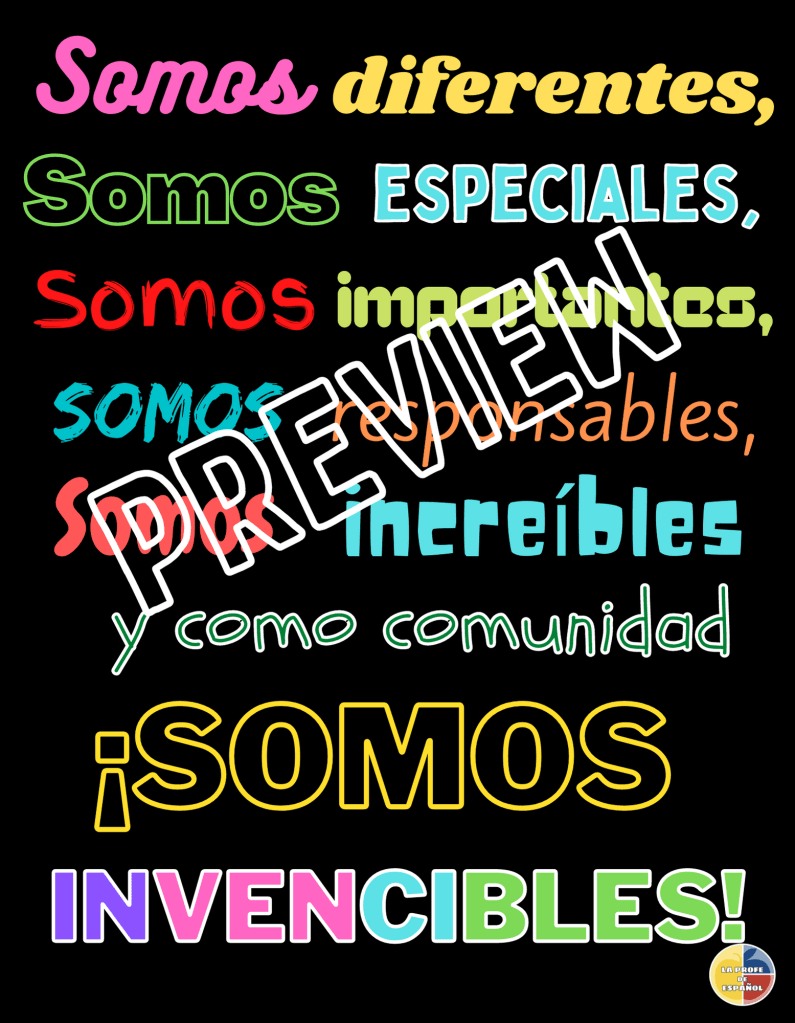
This year, I want to focus on affirmations and have my students see, say and remember this motto full of purposefully chosen inclusive cognates. I will also make it part of my webpage. I love using meaningful phrases, chants or poems as attention getters that can also be great brain breaks. Saying these affirmations chorally is one of the ways I strengthen our class community as my students are exposed to meaningful comprehensible input and repetition.
In the past, when I said “Somos”, my students responded “un equipo” and immediately looked at me and waited for directions. Last year, when I said “Somos”, they responded “una comunidad”. This year, we will say our community affirmations.
I learned this game from @lamaestraloca in her presentation at #practicalandcomprehensible in January and really wanted to give it a try. With Covid restrictions and wanting to keep my students safe, I came up with a virtual way that worked really great with my fifth grade classes that are made up of a combination of in-class and remote learners.
After finishing Write and Discuss about our Special Person, I handed in ten sentences from the description we put together and divided the class into four groups. I showed them the four dice on my Ben-Q Board and told them they were to write the translation of the sentences in English only when their group dice got a “six”. I counted to six before I press “Roll Dice” again because the page took a little while to load and to give them time to write. They were really into it and demonstrated great comprehension!
The groups that did not get a “six” had to keep their hands up, on their head, or behind their neck and were really supervising that no one was writing when it was not their turn. SO MUCH FUN!!
Random.org allows you to use up to sixty dice at the time.
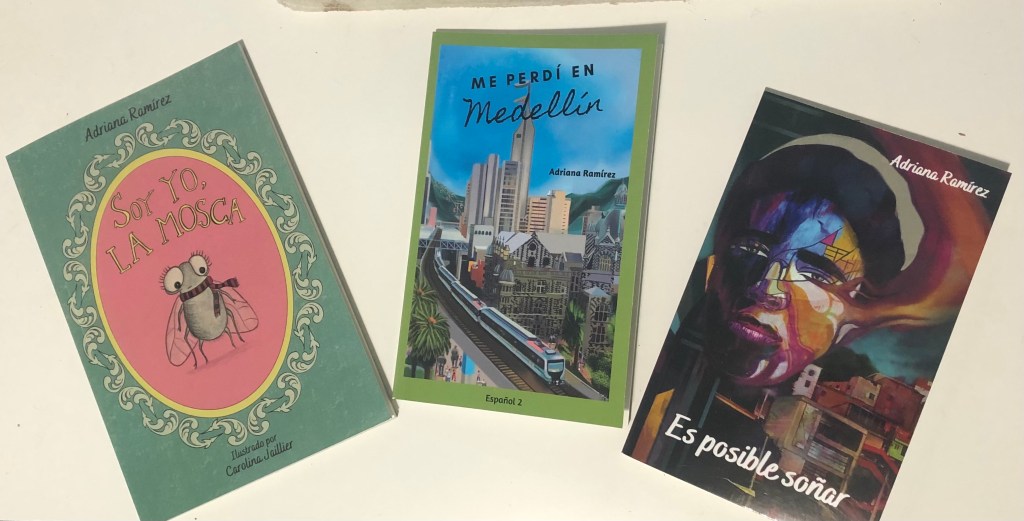
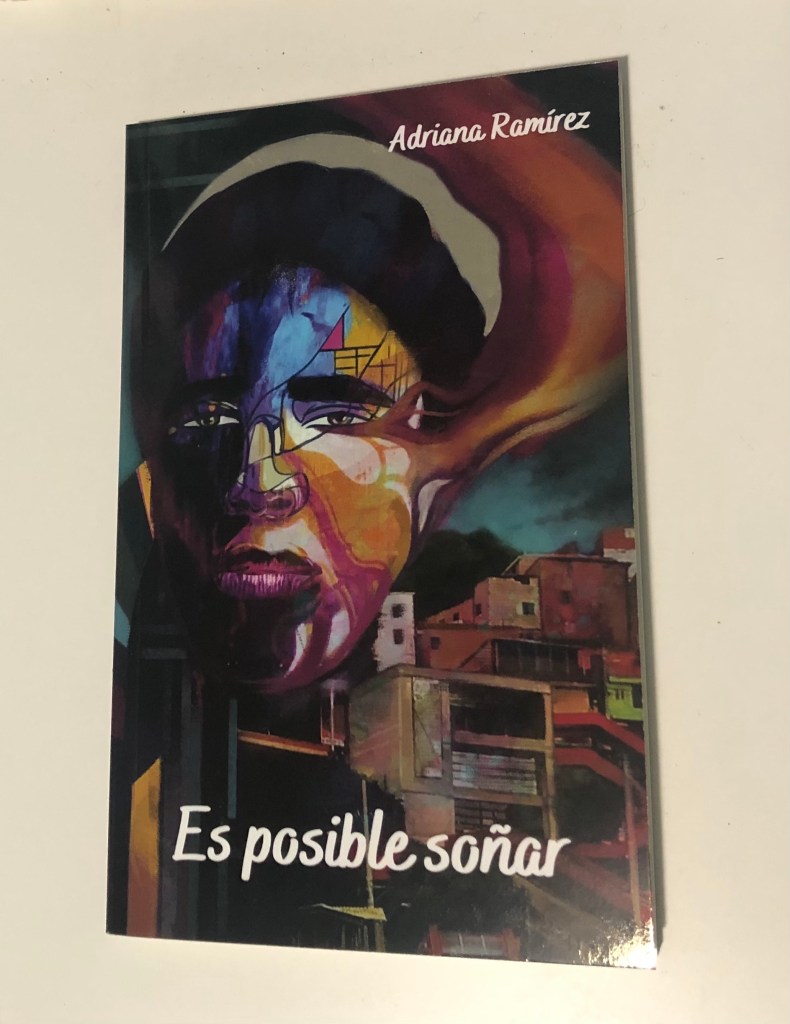
It has been a while since I had wanted to read a book by Adriana Ramirez and I finally got to read three at once. I was always impressed with Adriana’s posts and the extracts from her books she shared online that even though I teach children I decided to give her books a try.
I was looking forward to reading her new book “La Marimba de mi Abuelo”” but out of multitasking I ended up purchasing a combo of three of her former books on Amazon to my delight.
One thing I noticed right away was how carefully Adriana presented each book to her readers. I felt she would walk me through each one of the chapters starting with a great prologue and vivid images that made me feel I was immersed in the conversations of her vibrant characters. The illustrations and even the font she picked were key in keeping me hooked to every story until the end. I finished the three books last night.
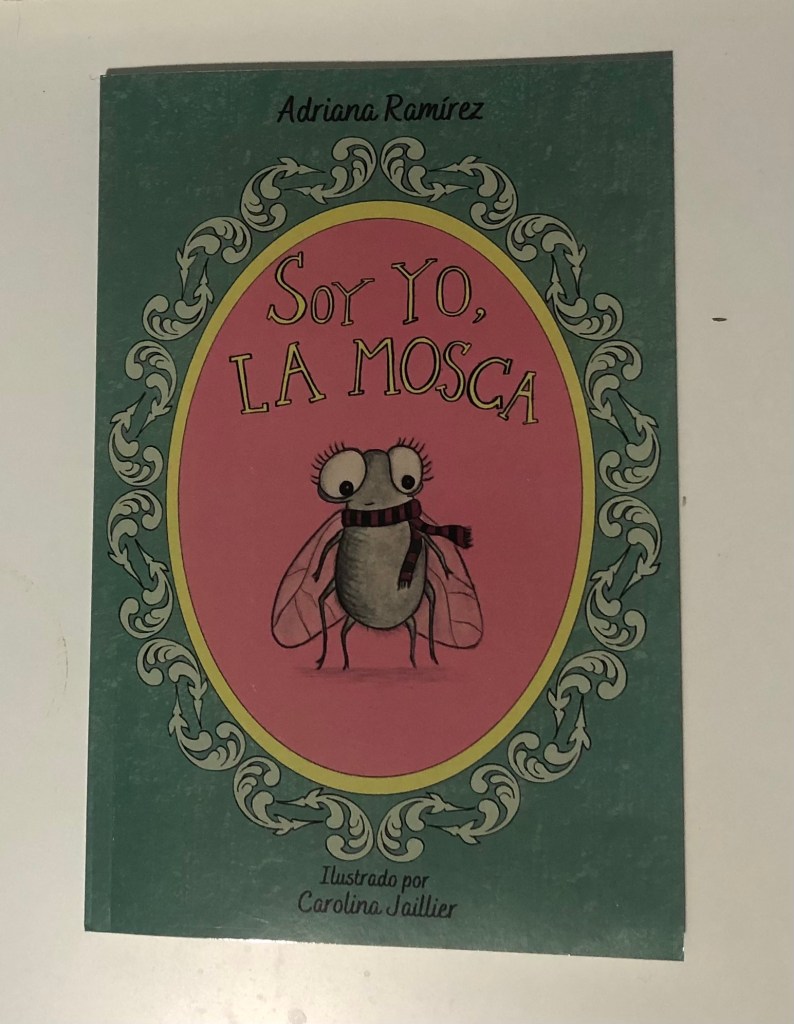
In her book “Soy yo, la Mosca”, I could not stop laughing at all the occurrences of her unique and innocent fly. The illustrations are beautiful and a great addition to make the story comprehensible. The language was simple, fun, repetitive and I can see my fourth and fifth graders truly enjoying the book as much as I did. I expect a lot of giggles. One thing that came to my mind while I was reading it was the melody of the words she used. Some paragraphs sounded like a chorus at times and I can see how that would help my students narrate chapters at ease.
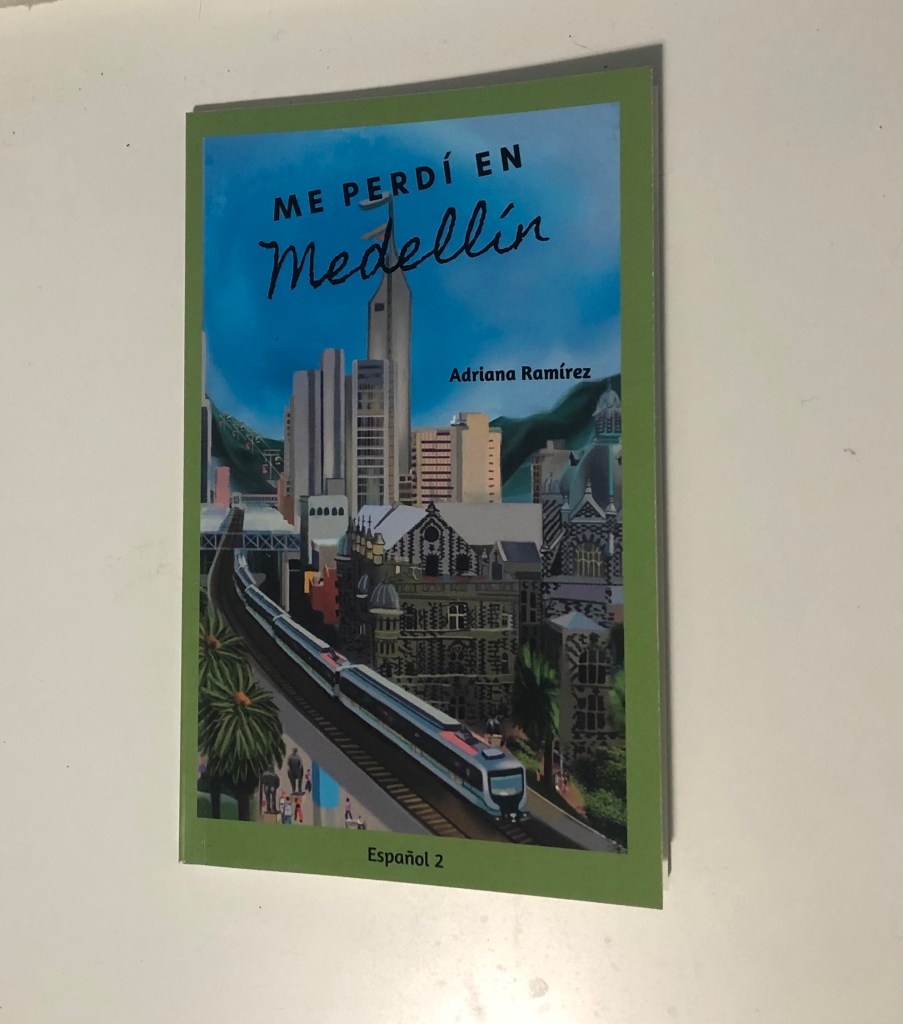
Although I am still not sure about buying a set of “Me perdí en Medellín” for my children, I am considering adding it to my fifth grade library. The book is full of lots of cultural aspects that Adriana explored and explained in simple, entertaining, and organic conversations that one can clearly notice she knows her city and also knows what tourists can find interesting and/or unusual. Adriana understands both views and kindly and respectfully promotes such mutual understanding not only among her characters but with her readers. Although I am Colombian, I have not visited Medellín yet but to me, each chapter was a trip to memory lane. I could see, taste, and feel what Andrés and Andrew were experiencing. I wonder how my heritage learners would feel like when reading it and what would seem familiar to them.
“Soy yo, la Mosca” and “Me perdí en Medellín” show how much Adriana loves her characters and also her good sense of humor. In “Es posible soñar” and “Me perdí en Medellín”, she shows how much she loves her city and her authentic interest in changing the harmful narrative that has impacted not only Medellin but Colombia for years. Adriana was able to refer to a sad moment in Colombian history with eyes of love, hope and optimism as she expressed through the voice of her characters the kind of story the media does not promote as much. I applaud and admire Adriana Ramirez’ sense of social responsibility to bring her readers, our students, an honest and respectful vision of Colombia that it is not easy to find in some books. Middle or High School students might finish the book sympathizing with Carlos, seeing him as an example of resilience, and as interested to travel to Medellin as I am. I can’t wait to read “La Marimba de mi Abuelo”!
One simple activity for this week. My first graders will duplicate the page and customize the card to wish someone a “HappyValentine’s Day”.
I just finished this activity that combines, listening, tracing, inserting shapes and “speaking” for my students to work independently reviewing colors. #Seesaw #SeesawAmbassador
My students are begging me to play this game since I presented it to them last week. Watch the video for instructions and click here to make a copy I would love to hear from you after you try it!
It has been challenging to find interactive activities for my students to do in their iPads besides using apps. I started collecting some to share with my kids as Choice Boards and tested them on my iPad. I hope they can be useful for you, too. I can’t wait until all iPads can run Flash Player somehow.
I have been looking for ideas to build community with my pre-school non-readers around their names using Seesaw. Thanks to the wonderful contributions of the Seesaw community to the activities library, I decided I will adapt these two so that my students and especially I learn how to pronounce everyone’s names properly:
I imagine the homeroom teachers might be doing something similar in their classes and I need to find out before doubling the work for our kids and their parents. This is plan “A” so far. Once I learn to pronounce all my students’ names, I want my kids to find their names while getting used to the Seesaw tools and their possibilities. I will see my students face-to-face for two weeks and then they will work independently for two more.I imagine my students would feel proud of me when they hear me saying their names properly or at least feel willing to help me pronounce them better 🙂
These are not my students’ names but just a template for you to adapt your children’s names if you decide to try the activity. I learned from Kris Szajner how to add the recordings in this video. You can only add up to 20 recordings per activity and would need to use Chrome to adapt the activity.
This activity not only involves clicking on the speaker icons or tapping on the markers but also tapping on the video. It also includes tracing names. I used one of Seesaw handwriting backgrounds and the feather font style which might not be what your kids are used to in their classes but which I found practical since they were all in Seesaw. I ran into this website https://www.handwritingpractice.net that offers “Handwriting practice worksheets custom made by you in – PRINT – D’NEALIAN or CURSIVE”. I was not sure I could use a screenshot for my students’ names because I could not find a way to contact the owners and ask them. It really looks like a great resource to print and send worksheets home.
My goal with this activity is for my students to get familiar with the question “¿Cómo te llamas?, review the chant and a game we will play to learn our names, find their names while listening to their classmates’ and then trace their own. I am not requiring my students to answer “Me llamo” unless they want to give it a try.
I hope you find these activities and ideas practical and can ease your workload somehow. All the best for you and your community this new school year!
Thanks to the wonderful posts about how to use Google Forms in different ways by La Maestra Loca and CI Liftoff, I was inspired to give them a try and use them to deliver input out of the stories I asked my former fifth graders about their classmates’ cards.
I call this collection : De Problemas y Soluciones Inesperadas. I will be using these forms as a kind of independent reading that I plan for my new fifth graders to access them either in our face-to-face or virtual classes.
Each form contains a story, its glossary, reading comprehension questions, a Jam to illustrate the story, and a link to Vocaroo to respond to the story.
The stories are classified into the following categories which organically developed as we talked about each student. I will be feeding the categories as I finish working on each story. Click on the title of the story to make a copy.Please let me know how you find them and what you would like me to add/change.I hope you can use them with your students, too.
Edpuzzle has been a tool I have used often since I discovered it a few years ago in one of the Facebook groups I belong to. My students love it and I love how my students get input and interact with it seamlessly. Edpuzzle has worked well as a way to expose my students to other Spanish-speakers, to input that I can incorporate to the video through the questions I ask, and to the many possibilities Youtube or other videos offer.
I have been using the free version and have been leaving some that I am planning to reuse in the future: ones that I modified, and ones that I created myself (old Edpuzzles here). During remote learning, I created a few more and I decided to incorporate a different format in some that I hope you would like to use in your classes.
My version of “Piedra, Papel o Tijeras”
My fourth graders learn about schools, their own, the ones in Spanish-speaking countries, and this one that fit perfectly for them to discuss not only vocabulary in context but bullying.
Marie Curie or my student who will become our next Nobel laureate
We learned about Marie Curie because she was a person one of my students admired deeply and we had to talk about her when we talked about her interests. I love how Edpuzzle allowed me to focus on specific sections to create questions that guided my students into comprehending the information independently and successfully.
Inspiration, soccer, and reading
My students loved learning about Marco Antonio while they watched him play soccer and read what his story was about. There was just a little audio they had to listen to but it was mostly captions they associated to the photos they were seeing. Letting students work at their own pace pausing or rewinding the video proved to be a challenge they enjoyed taking. They felt a great sense of accomplishment that I could notice when they interacted in class about the video.
Food for thought
We teach a language and the possibilities are endless in terms of all we can learn and what we can do. I loved learning how to make Paneer, the favorite dish of one of my students, and he was so surprised he learned the recipe from a native Spanish speaker before he learned it from one of his relatives who were usually the ones who made it for him. Thanks to the pauses and the small sections, my students were able to focus on identifying the key details they needed to answer my questions.
And what if the input is in English?
Well, I believe there are many ways to learn something and especially to learn a language. This trailer is in English but my input is in Spanish. My students needed to focus on scenes or audio to figure out the answers to my questions. They answered the questions in Spanish and discussed them in Spanish, as well. Edpuzzle allowed me to keep the parts of the video that I considered to be the most important ones and discard the rest. What is not to love about Edpuzzle?
If you can see yourself using my creations in your classes, please consider leaving me a comment or following me. I would love to hear/read what you think : )





 Striving and Sharing