

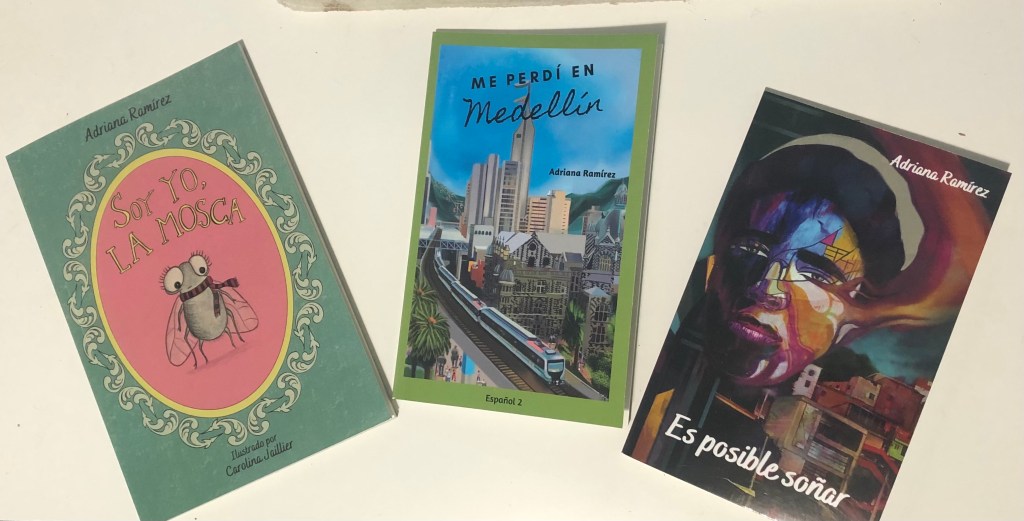
It has been a while since I had wanted to read a book by Adriana Ramirez and I finally got to read three at once. I was always impressed with Adriana’s posts and the extracts from her books she shared online that even though I teach children I decided to give her books a try.
I was looking forward to reading her new book “La Marimba de mi Abuelo”” but out of multitasking I ended up purchasing a combo of three of her former books on Amazon to my delight.
One thing I noticed right away was how carefully Adriana presented each book to her readers. I felt she would walk me through each one of the chapters starting with a great prologue and vivid images that made me feel I was immersed in the conversations of her vibrant characters. The illustrations and even the font she picked were key in keeping me hooked to every story until the end. I finished the three books last night.
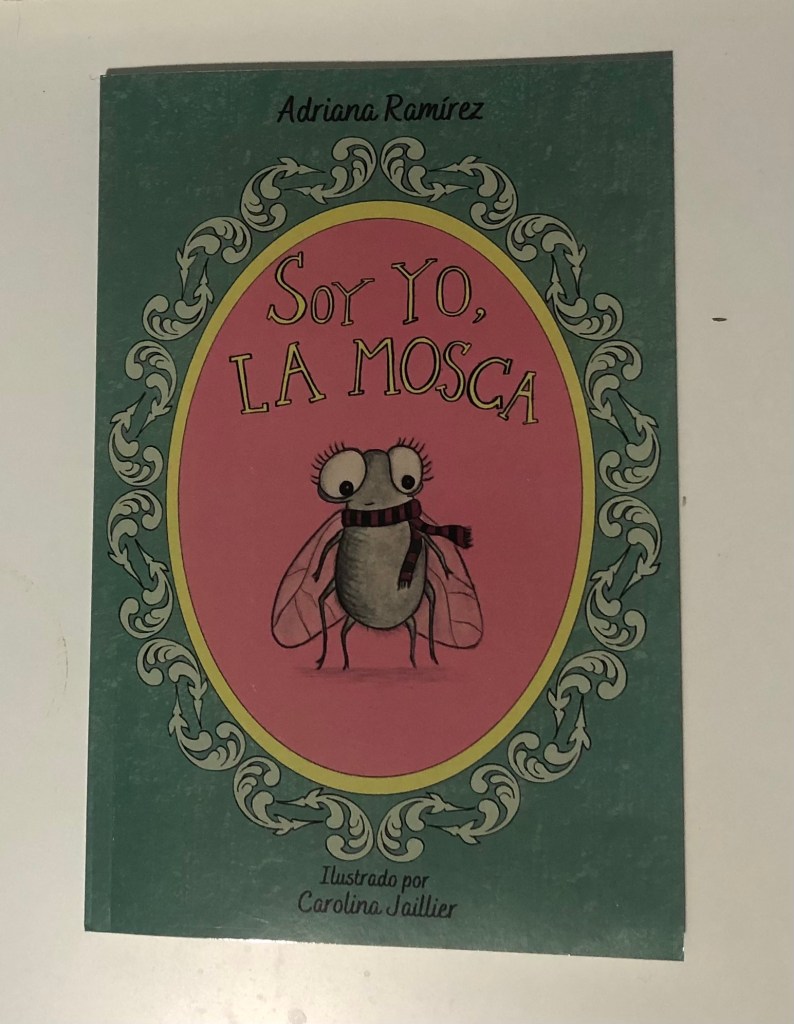
In her book “Soy yo, la Mosca”, I could not stop laughing at all the occurrences of her unique and innocent fly. The illustrations are beautiful and a great addition to make the story comprehensible. The language was simple, fun, repetitive and I can see my fourth and fifth graders truly enjoying the book as much as I did. I expect a lot of giggles. One thing that came to my mind while I was reading it was the melody of the words she used. Some paragraphs sounded like a chorus at times and I can see how that would help my students narrate chapters at ease.
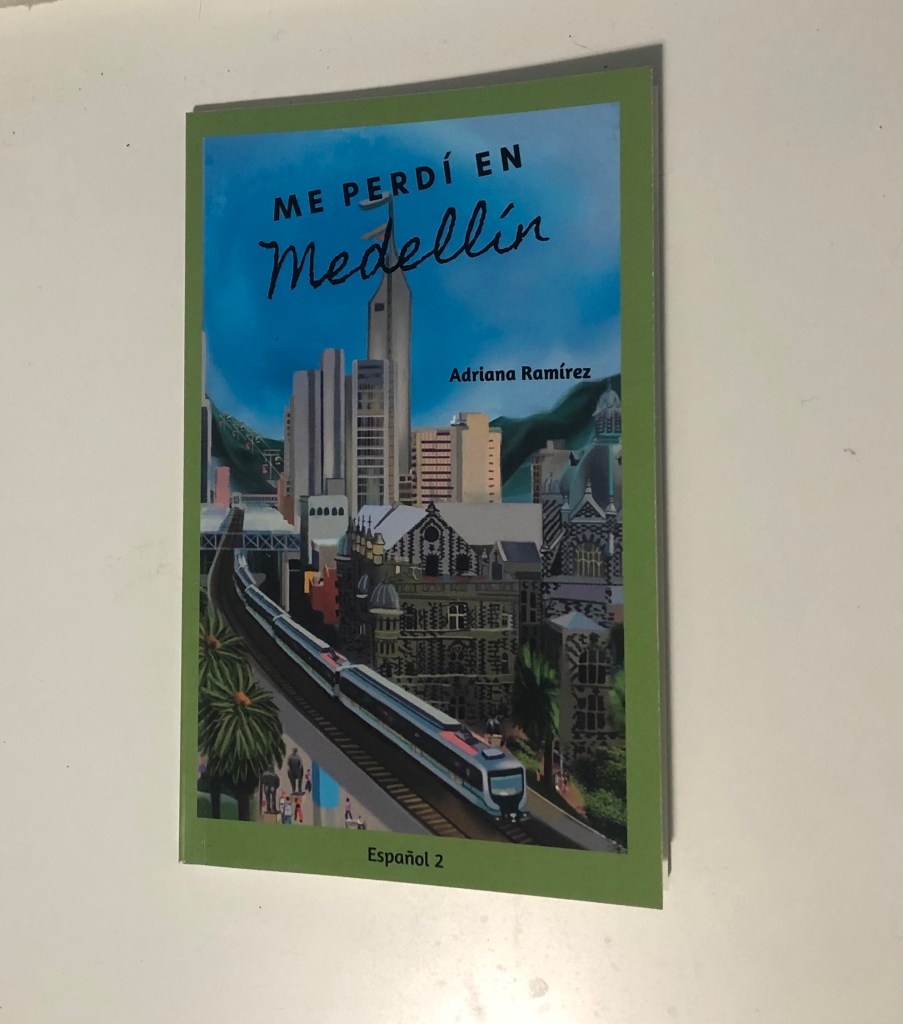
Although I am still not sure about buying a set of “Me perdí en Medellín” for my children, I am considering adding it to my fifth grade library. The book is full of lots of cultural aspects that Adriana explored and explained in simple, entertaining, and organic conversations that one can clearly notice she knows her city and also knows what tourists can find interesting and/or unusual. Adriana understands both views and kindly and respectfully promotes such mutual understanding not only among her characters but with her readers. Although I am Colombian, I have not visited Medellín yet but to me, each chapter was a trip to memory lane. I could see, taste, and feel what Andrés and Andrew were experiencing. I wonder how my heritage learners would feel like when reading it and what would seem familiar to them.
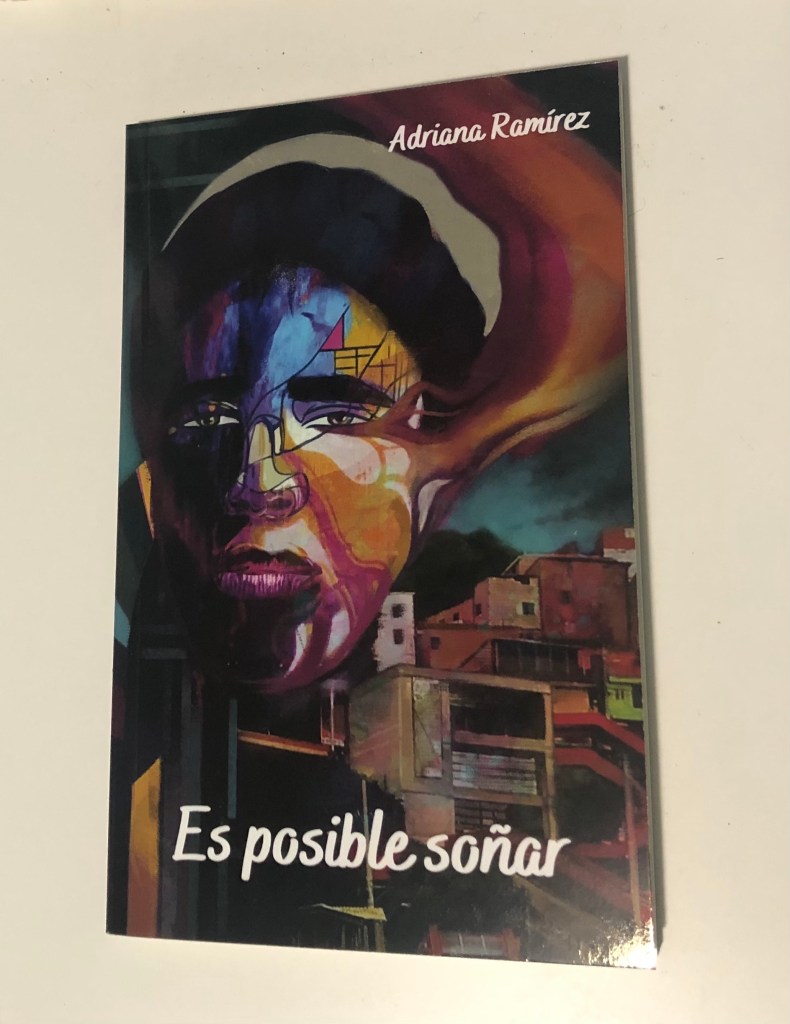
“Soy yo, la Mosca” and “Me perdí en Medellín” show how much Adriana loves her characters and also her good sense of humor. In “Es posible soñar” and “Me perdí en Medellín”, she shows how much she loves her city and her authentic interest in changing the harmful narrative that has impacted not only Medellin but Colombia for years. Adriana was able to refer to a sad moment in Colombian history with eyes of love, hope and optimism as she expressed through the voice of her characters the kind of story the media does not promote as much. I applaud and admire Adriana Ramirez’ sense of social responsibility to bring her readers, our students, an honest and respectful vision of Colombia that it is not easy to find in some books. Middle or High School students might finish the book sympathizing with Carlos, seeing him as an example of resilience, and as interested to travel to Medellin as I am. I can’t wait to read “La Marimba de mi Abuelo”!
 Striving and Sharing